
Lianne - One City Together
  • Home
  • About
    • About Lianne
    • My Priorities
  • Speeches
  • Gallery
  • Contact

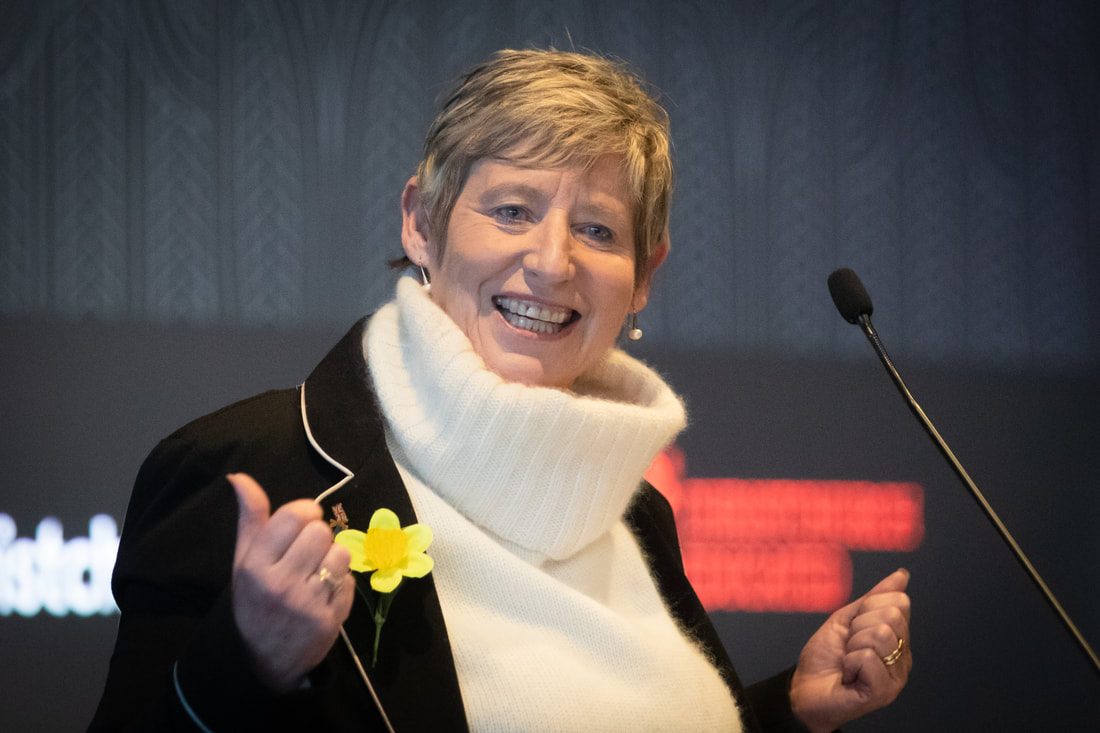
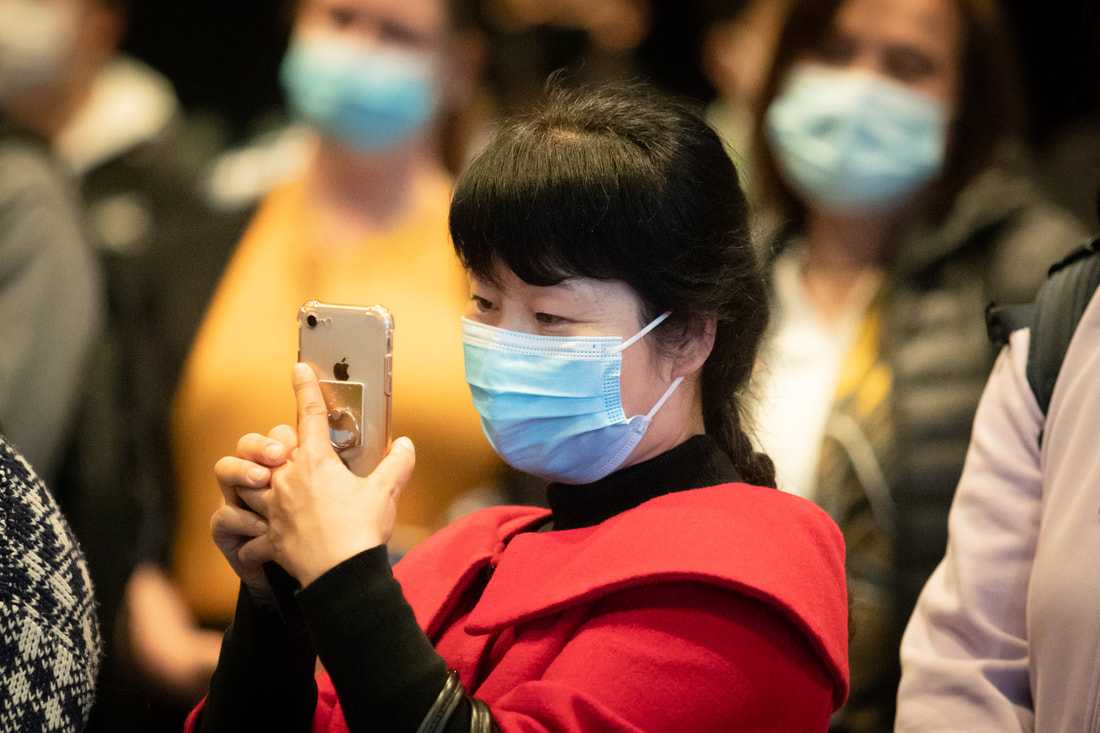
International Student Welcome

26/8/2022

 
Tēnā tatou katoa. It’s my absolute pleasure to be here today on behalf of the city alongside ChristchurchNZ and Christchurch Educated.

Can I acknowledge Malcolm Lyall the Deputy Mayor of Selwyn; Grant McPherson, Chief Executive of Education New Zealand who has come to Christchurch specially for today’s event; all of our distinguished education representatives and special guests; and most importantly you, our international students.

Today is significant because it’s the first time that we have officially welcomed tertiary students to our city since before the pandemic. And it’s especially meaningful because so many of you have been through so much to get here, facing difficulties that didn’t exist before COVID-19.

Last week I met with a group of secondary school students who have recently come to New Zealand, just like you. One of the questions I was asked by the group was what was the benefit of international education to Christchurch?

The answer is that the international students add so much to the social, cultural and economic life of our city. You are part of our story, our desire to be a place that is open to new ideas, new people and new ways of doing things – a place where anything is possible.

So I wanted to be here myself to tell you that we truly value having you here, and we’re honoured that you’ve chosen to make Christchurch your second home.

You have chosen a very special part of the country to come to. Not only do we have quality educational institutions, but we can offer a lifestyle and special experiences that will shape you as a person. For example I often say to visitors to our city that you can go skiing and surfing in the same day – not that you would want to!

I would like to finish with a quote from the great Nelson Mandela, who simply said that “education is the most powerful weapon that you can use to change the world”.

​I wish you well for your studies and your lives here in Christchurch.
Nō reira tēnā koutou, tēnā koutou, tēnā ra tatou katoa

Normal and Model Schools Association 2022: Leadership through challenging times

24/8/2022

 
May I begin by welcoming you to this important opportunity to immerse yourselves in the NAMSA conference 2022. And may I particularly welcome delegates who have come from out of town to Ōtautahi Christchurch.  

As Mayor, it’s always great to welcome people to a special place that offers the opportunity to reflect on the world of possibility that our challenging times can offer– particularly with the two themes – today being a day of personal growth and reflection and tomorrow, a day for collaborative growth.

Time for reflection and the role of collaboration are both important aspects of leadership.

I remember asking my mother, a long time ago, what a normal school was – with seven kids she had always been involved in education – PTAs and the like – so she explained the connection between normal schools and the then Teachers’ Colleges and the special role you hold in supporting our teachers on their journey to be teachers. It was later that I learned of model schools. I have only ever had one in my electorate Ouruhia Model School – and I acknowledge Mark Ashmore-Smith.

When Mark first wrote to me earlier this year, he said that schools in Canterbury have undoubtedly been through challenging times in the past 12 years, and nationwide schools are facing previously unheard of challenges. He said that while NAMSA schools are uniquely positioned and focused on working with universities to produce the best teachers we can, schools were also facing other huge challenges (social, economic and health).

This was to give me context to the request to speak about leadership through challenging times.

I guess what he was reflecting was that schools, being the heart of the communities from where they draw their students, are having to face up to the same pressures that are impacting their whānau.

That means this is a very challenging time for the leadership of your schools right now and I want to acknowledge that.
Leadership does not exist in a vacuum.

Our city has been called on to respond to and recover from the impacts of disasters, over the past 12 years caused both by natural events and man-made.

We have had earthquakes, flood and fire – we have had the devastation of the terrorist attacks of 15 March 2019 - and now we are still reeling from the impacts of the global pandemic.
We have seen leadership emerge from the heart of our communities in response to different events.

I was a Member of Parliament at the time of the earthquakes and also at the time of the shock announcements over the reorganisation of schools that followed in Sept 2012 – something which had a terrible effect on many communities who were still struggling to cope with the damage caused by the earthquakes.

I remember speaking to an ashen faced principal as he came out of the briefing with the then Minister of Education, Hekia Parata. I said how was it?

He said he needed to hold it together for the sake of the kids. He said we had to tell the kids and their families that no matter what, they would make it work and they would be ok.

It was a selfless comment and reflected the compassion that he held for his students and his community. But it also reflected the powerlessness that he felt and that his community would experience opposing the change. I could see in his face the futility he felt about taking on a fight he could not win.

There were school communities that came together and stopped the closures they were facing; others did too, but to no avail. The power imbalance contrasting the outcomes based on socio-economic status was stark.

I left Parliament and was elected the Christchurch Mayor in October 2013 as this was playing out.

My former staff gave me a parting gift – a necklace – it had a pendant with a quote on it, which reads: "The most courageous act still is to think for yourself. Aloud". Coco Chanel.

That quote is really about the importance of having the courage to speak up and stand up for what you believe in.

The three smaller beads had one word each: community, resilience and leadership.

My team knew the significance of these three words to me - words I thought I understood but didn't truly appreciate until after the earthquakes.

Community is not the co-location of houses – that's a suburb. It's the relationship between the people in those houses and their relationship as a group with decision-makers – that's community – and the strength of those relationships – that’s social capital. And, of course, community is not limited to location or place – it also refers to communities of identity and interest.

Resilience is not strength in the face of adversity – that's stoicism; something we Cantabrians have in spades. We have learned that resilience is so much more than the traditional meaning of bouncing back after something occurs. It includes the capacity to adapt to a new environment or new conditions.

But it is the capacity to co-create a new future when there is no going back to normal - that is the true hallmark of resilience for me.

And leadership is not a position – it is a mark of character.

People often look to the heroic form of leadership after a disaster - strong, decisive, authoritative, inspiring, and responsible - it can be comforting to have someone else taking charge, knowing what to do. And you should never underestimate the importance of reassurance. When people are shocked – like they were with the earthquakes – it is the role of a leader to offer reassurance.

But what we have learned from the post-disaster period or the recovery, is that leadership needs to be much more than that heroic form of leadership – leadership needs to be engaging, respectful, inclusive, empathetic and intuitive. 

These are the leaders who are trusted and who in turn entrust others – they look to others for their capabilities and empower them to take the lead.

Facing a crisis also means you don’t always know what you don’t know. So, humility has an important role to play.

Admitting what you don’t know helps build trust. You always have to be careful what you commit to. Expectations set during such times are hard to walk back when they prove unachievable. You simply can’t make promises you may not be able to keep – no matter how much you may want to offer that comfort.

Sharing information in an open and transparent way and engaging with the community – in your case your school community – are also factors in building trust. And trust is something you can’t do without when we are talking about leadership.

And in that context, I wanted to briefly reflect on the terrorist attack on our city mosques – you never know what challenge you will be called on to face – this was where empathetic leadership set the scene for what was an extraordinary response.

Even the simple image of our Prime Minister wearing a headscarf – hugging members of the Muslim community – her pain and her compassion visible to all – captured the essence of empathy. 

She offered comfort and hope from a position of integrity.

Empathy is an intangible quality, which is however, by its meaning, authentic. 

Those most deeply affected by what had occurred knew that their Prime Minister was there for them, and that she knew exactly how they felt.

Members of the Muslim community felt understood and affirmed.

This set the stage for a unified call for compassion, which will always define our collective response as a city and a nation. The Muslim community led the way in the call for unity, peace, love and compassion, and the call for forgiveness. And we were inspired by their leadership to respond in kind.

It was at this time that I became aware of the influence that social media was having on members of the community. I was aware of the phrase going viral – but not the dark places that have been fostering hatred of those who are not like them. I have been shocked by what I have learned.

It makes me think your challenges as leaders will be greater than ever as we seek to right the wrongs of the past. The impact of the internet is only now becoming apparent, especially as young people seek to explore their world without the judgement that life experience brings.
 
Another point to make is that there is no more important a time than in the immediate aftermath of a crisis to stand back and take a helicopter view that engages a wide range of perspectives before making irreversible decisions.

This is why a recovery leader may be different from the person who takes the leadership role in responding to the immediacy of the crisis. And that’s why relationships are so important.

You are talking about collaboration tomorrow and I used the word co-creation when referring to resilience earlier.

Co-creation brings with it the sense that we are in this together; a recognition that whatever has happened is not someone else’s problem to solve, but one that we work on together.

I remember Sir Peter Gluckman, the then Prime Minister's Chief Science Adviser, prepared a report for the government three months after the February earthquake. He said the potential exists for the emotional effects of disaster to cause as great a degree of suffering as do the physical effects such as injury and loss of property or income.

He said:
"The earthquake was a disempowering event – an event that individuals had no control over and leaves them essentially with no control over how they live.

The need to regain some sense of control over one's life is central
to the recovery process. Disempowerment essentially reinforces the initial trauma."

Restoring a sense of agency to a community, empowering them to make decisions, and helping them see it through, that’s what will help them build resilience.

I remember someone sending me JK Rowling's speech on the occasion of Harvard University's 357th Commencement. She talked about failure – not to glamorise the experience of finding herself at the end of a broken marriage as a solo parent with a Classics degree and not much else.

In fact, there was nothing glamorous about her experience of poverty and despair. But she said this:

So why do I talk about the benefits of failure? Simply because failure meant a stripping away of the inessential. I stopped pretending to myself that I was anything other than what I was and began to direct all my energy into finishing the only work that mattered to me. Had I really succeeded at anything else, I might never have found the determination to succeed in the one arena I believed I truly belonged. I was set free, because my greatest fear had already been realised, and I was still alive, and I still had a daughter whom I adored, and I had an old typewriter and a big idea. And so rock bottom became the solid foundation on which I rebuilt my life.


I have highlighted some of the words – stripping away the inessential; I might never have found the determination to succeed; my greatest fear had been realised and I was still alive. And rock bottom became the solid foundation on which I rebuilt my life. She goes on to say:

The knowledge that you have emerged wiser and stronger from setbacks means that you are, ever after, secure in your ability to survive. You will never truly know yourself, or the strength of your relationships, until both have been tested by adversity.


And that is one of the most important things I have learned, and that is that when you hold a leadership role, you need to be well-supported, and you need to have established very strong relationships.
I have invested a lot of time and energy into building relationships in my role.

However, Covid has hit hard when we are not yet fully recovered from the events that have gone before – people are tired – and the internet has opened a Pandoras Box of toxicity that is in many respects more damaging than the pandemic itself.

And the challenges we are going to have to confront are only going to get greater – both natural hazards and the man-made disasters.

This makes the role you play more vital than ever.

I read this back this morning and felt the ending was a bit bleak.

So, I thought I would add a reflection I gave on the life of Nelson Mandela, whose life has been one of inspirational leadership.

"As I walked out the door toward the gate that would lead to my freedom, I knew if I didn't leave my bitterness and hatred behind, I'd still be in prison."


One of the legacies that Nelson Mandela left his country was the Truth and Reconciliation Commission, which was set up by the Government of National Unity to help deal with what happened under apartheid.
The interim constitution described it as providing an historic bridge between the past of a deeply divided society characterized by strife, conflict, untold suffering and injustice, and a future founded on the recognition of human rights, democracy and peaceful co-existence and development opportunities for all, irrespective of colour, race, class, belief or sex.

The promotion of this approach took great courage and true leadership. It would not have been possible from someone who was still trapped in prison – physically or metaphorically.

It was a nation's chance for restorative justice – the chance to speak the truth, acknowledge what had been done, own up and take responsibility for personal actions, whether directed or otherwise, and to express sorrow – a genuine apology for the wrongs that have been committed against others.

Recording the history – laying down the truth - and apologising for wrongdoing is at the heart of our Treaty settlement process here in Aotearoa.

Reconciliation cannot come without truth, because it requires forgiveness. And that cannot be offered to someone who denies the truth.

This knowledge should guide all in leadership positions as it did Nelson Mandela, who understood that so completely.

We have a history as a nation ourselves, which we must reconcile.

And the history curriculum gives me real hope for our future.

And an important part of that future is in the hands of your kaiako – those who teach and those who learn – and your leadership.
No reira tena koutou, tena koutou, tena koutou katoa.

Book Launch - A Decade of Disaster Experiences in Otautahi Christchurch

24/8/2022

 
​It is absolute thrill to welcome you here and thank you for coming this evening.

I have so many memories of the times that this decade of reflections has invoked that in some respects I had forgotten about.

For me, the memories always start with Charles Dickens – A Tale of Two Cities – it was the best of times; it was the worst of times.

The best times are reflected in the people I met – like Bruce – and the generosity that each of them showed to a Member of Parliament who had set herself on a journey of discovery in the wake of the disaster the recovery from the earthquakes came to represent.

Bruce was part of the very first presentation to community leaders after the September earthquakes – one of the councillors went and she gave me a copy of the slide deck.

This is where I learned about the hidden story – what was going on before the crisis began – because not understanding that could condemn us to re-embedding any dysfunction that pre-existed the event into what was built.

I have spoken many times about learning the lessons that history teaches us. We know we are condemned to repeat them if we don’t.
And as I have also said many times, we look back not to blame, but to understand. If we name, shame and blame then we risk not learning the lessons that will help others in the future.

I still believe that people don’t deliberately set out to ignore best practice – the trouble occurs when they convince themselves that something has no precedent, then how else to proceed but to make it up as we go.

This is an incredibly significant book about our disaster experience, because it engages a range of Critical Disaster Studies Perspectives.
I have read once over lightly. And I can’t wait to dig more deeply into each aspect.

From the opening chapter on the critical studies imperative through to the concluding reflections: making social choices in turbulent times, we are asked to reflect on the events that occurred, the order of priorities that were chosen and how decisions were made.

I was reflecting today on the announcement in Sept 2012 of the schools’ closures and mergers the government decided to impose on communities still struggling to come to terms with their earthquake damage. The reflections in here about the decision to prioritise the base-isolation of the Art Gallery over other more critical work caused me to think about those who fought the individual school decisions and won and those who fought equally hard and lost - from a socio-economic perspective – Redcliffs and Philipstown equally deserving but totally opposite results.

This book is an important contribution to the literature that will inform best practice for the future. I recall the despairing message given by one of the speakers at the International Speakers Series - an important component of the Councils extraordinary Share an Idea campaign - that the model imposed by central government was an example of worst practice.

I met Doug Ahlers from Harvard University and I know when he wrote that he – as did all the speakers who co-signed a letter to the PM – he was wanting to offer help to a city that each knew would struggle to recover under the model imposed by the Canterbury Earthquake Recovery Act.

There is considerable reflection in this book about the importance of Share an Idea and the imposition of the Blueprint that followed. The most telling line was: 
“The Minister’s decision to jettison the plan is a dark spot that closed down opportunities for civil society to shape recovery outcomes”.
Learning lessons is an important part of our shared responsibility post-disaster. But most importantly we need to ensure that the lessons we learn from our experience are embedded into future practice, so we don’t make the same mistakes again and again.

We often learn more from the things we get wrong, as we do from the things we do well.

This is a timely book and will be of considerable interest to community members and academics alike.  A big congratulations to all the contributors and editors. This will be essential reading for those who want to commit to best practice and to engage the community every step of the way. And for every candidate in the coming elections.

I will end with this whakatauki: Kia whakatōmuri te haere whakamua - 'I walk backwards into the future with my eyes fixed on my past' – that’s how we learn from what we have experienced. Thank you once more.

NZ Aged Care Association and Retirement Villages Association Annual Summit

22/8/2022


Cities Facing Extremes: How Do We Adapt?

1/8/2022

 
Slide one: Nga mihi nui kia koutou katoa. And kia ora to you all.
I’m hoping to share with you some ideas about where to look for the opportunities that always come from crisis.
Slide two: The Greater Christchurch area is home to around half a million people and is New Zealand’s second largest city.
It is a low-lying coastal city with a large Peninsula, which means we have an extensive coastline exposed to sea level rise.
First settled by Māori, they knew their environment well. They could read the weather and the stars. They understood the rivers and the land.   The European settlers who came in the 19th century knew none of that.
Wetlands, which had been traditional food gathering areas, were drained for farming and ever-increasing urban development. The settlers “tamed” the environment or so they thought.
Slide three: On the 22 February 2011 the earthquake, which devastated our city, showed us just how vulnerable we were. 185 lives were lost; many more were injured. There was extensive damage to land, homes and businesses, as well as to the city’s infrastructure.
There are two aspects of our experience that I want to touch on.
Both relate to the opportunity to build back better – the first is in terms of the built environment, and the second is building community resilience to future challenges.
Slide four: After the earthquake, the City Council developed a draft recovery plan based on a community engagement simply called Share an Idea. This engaged the whole community in reimaging what the central city could be. Thousands participated. It was a remarkable exercise in co-creation.
And although the process was superseded by a government blueprint, there are great examples of when the design matched the expectations the community had set.
Slide five:
This is one of those, and shows what happens when we put people before cars. I chose these images because build back better doesn’t just mean seismic engineering – it is the opportunity to reimagine our sense of place by engaging with the people who live there.
A bleak pre-earthquake environment reimagined as a Riverside Market and a pedestrianised street, showing the best of what a partnership with the private sector can offer.
 
Slide six: The second issue relates to the opportunity the earthquake offered to build resilience to future challenges.
We experienced in a matter of seconds the impact of sea level rise predicted over 100 years as land levels dropped, in places, by more than a metre.
The earthquakes exposed poor planning processes, and along with the underlying nature of a city built on a swamp, led to an increased vulnerability to flooding.
One of my early decisions as Mayor was to establish a multi-disciplinary Mayoral Taskforce on Flooding, which provided us with a framework for making decisions on flood protection and mitigation works, including a voluntary buy-out scheme for the most vulnerable homes.
Slide seven: The government had already intervened after the earthquakes with a buy-out of around 7000 homes.  This cleared a 600-hectare area of low-lying land, adjacent to one of our rivers.
This has made us more resilient to flooding and also given us the opportunity to develop and plant wetland areas, protect biodiversity, manage stormwater and improve water quality.
Involving children and young people in community planting days and wetlands restoration has been a great way to develop an inter-generational commitment to our waterways.
The extensive community engagement the regeneration planning process involved, has helped us develop an approach to coastal hazard adaptation planning.
Slide eight: We are now working with 23 priority communities in coastal and low inland areas to develop a shared understanding of the science; and finding locally appropriate adaptation approaches that suit each community. 
The coastal panels are made up of community and Māori members, bringing local and traditional knowledge to the table, and they are supported by a specialist and technical advisory group.
Slide nine: My last slide references a quote, which many of you will know, “The wisdom of the community always exceeds the knowledge of the experts.” It was adopted by frustrated community groups after the earthquakes when no-one would listen to them.
However, after everything we have been through, I would now say: (click)
“The wisdom of the community when combined with the knowledge of the experts always exceeds what one can offer without the other”.
And that is why we have chosen the adaptation planning framework which, empowers Māori and our local communities together to plan for the future.
And we do so as this whakatauki says - Mō tātou, ā, mō kā uri ā muri ake nei – for us and our children after us.  Kia ora koutou katoa.

    Speeches

    September 2022
    August 2022
    July 2022
    June 2022
    May 2022
    April 2022
    March 2022
    February 2022
    January 2022
    December 2021
    November 2021
    October 2021
    August 2021
    July 2021
    June 2021
    May 2021
    April 2021
    March 2021
    February 2021
    January 2021
    December 2020
    October 2020
    September 2020
    August 2020
    February 2020
    January 2020
    December 2019
    November 2019
    October 2019
    September 2019
    August 2019
    June 2019
    May 2019
    April 2019
    March 2019
    February 2019
    December 2018
    November 2018
    October 2018
    September 2018
    August 2018
    July 2018
    June 2018
    May 2018
    April 2018
    November 2017
    October 2017
    September 2017
    August 2017
    July 2017
    June 2017
    May 2017
    March 2017
    February 2017
    January 2017
    December 2016
    November 2016
    October 2016
    September 2016
    August 2016
    July 2016
    June 2016
    May 2016
    April 2016
    March 2016
    February 2016
    December 2015
    November 2015
    October 2015
    August 2015
    July 2015
    June 2015
    May 2015
    April 2015
    March 2015
    February 2015
    January 2015
    December 2014
    November 2014
    October 2014
    September 2014
    August 2014
    July 2014
    June 2014
    May 2014
    April 2014
    March 2014
    February 2014
    January 2014
    December 2013
    November 2013
    October 2013
    September 2013
    August 2013
    June 2013

    Categories

    All
    Speeches

    Social Media